
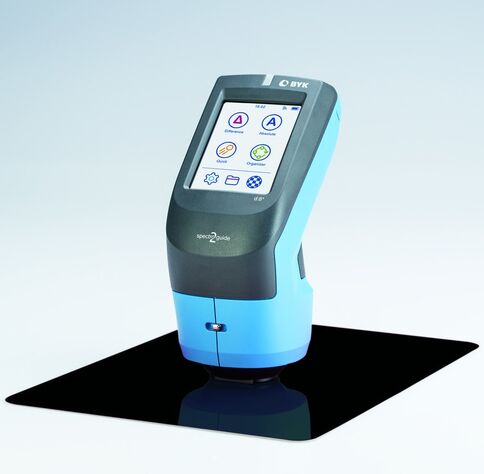

spectro2guide Pro 45/0
Color & Jetness measurement with 45/0 circumferential geometry
- Color control as you see it with 45/0 circumferential geometry
- 60° gloss measurement
- Color control for fluorescent and non-fluorescent samples
- Jetness measurement of deep black colors
- Outstanding technical performance for use of digital standards
- Professional data analysis with smart-chart software
Handheld Spectrophotometer for Color and Jetness Measurement

Handheld Spectrophotometer with High-Tech LEDs
High-tech. Smart. Experienced.
The spectro2guide uses innovative, high performance LED technology as light sources. Smart testing combined with our long-standing experience guarantees an outstanding performance of the LEDs. Short-term, long-term and temperature stability as well as a homogeneous illumination spot are unsurpassed in the industry.
The long lifetime of our LEDs, guaranteed for 10 years, ensure low maintenance - no lamp replacement needed.
Global Color Management
Digital standards. Excellent performance.
A superior accuracy and excellent inter-instrument agreement allow use of digital standards. One binding reference eliminates sources of error and physical standards no longer need to be exchanged. Thus, color control data are reliable and communication among all parties is seamless and efficient.
Digital standards bring the complete supply chain on target!

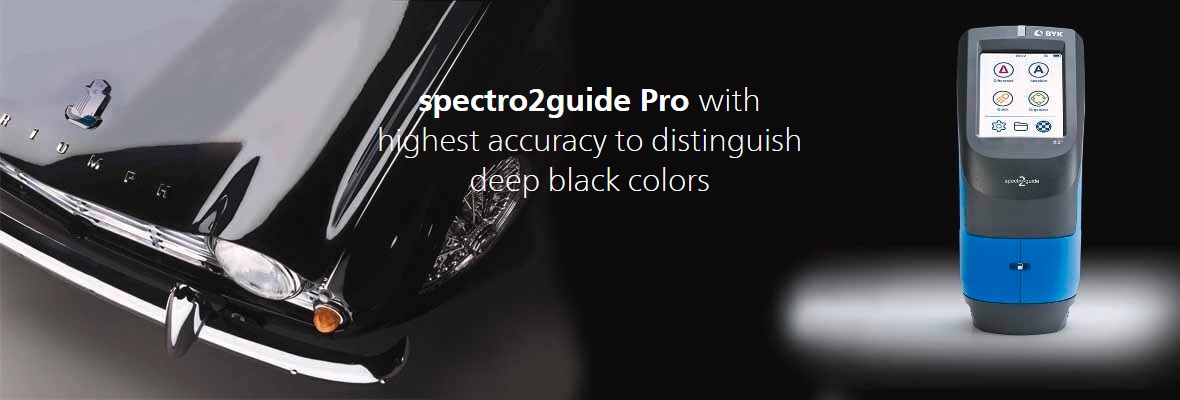
Control color as you see it

The 45/0 geometry uses 45° circumferential illumination and 0° viewing perpendicular to the sample plane.
Color Stability Prediction
Excited. Emitted. Shifted.
The combination of a spectrophotometer with a fluorimeter opens up completely new perspectives to control color quality and guarantee color stability.
Lightfastness is analyzed with proprietary calculations predicting the color change with total color difference DE as well as individual color component deltas (∆L, ∆a, ∆b, ∆C, ∆H).
The excitation and emission range of fluorescent behavior is displayed with the slider function in smart-lab.

Brilliant Color Display
Swipe. Touch. Measure.
As for mobile phones, there is a trend towards ever-larger displays. The new spectro2guide is completely in line with this trend offering a 3.5” color touchscreen – the largest on the market. An icon-based menu, colorful data tables and graphics ensure an intuitive smart phone like operation. As you are used to, you can touch or swipe with your fingers – it even works when wearing gloves. Alternatively, you also can use a stylus, which is enclosed in the housing – always handy.

Smart Docking Station
Park. Charge. Control.
As first handheld spectrophotometer on the market, the spectro2guide comes complete with a docking station offering an auto diagnosis and an automatic calibration reminder. This is made possible by the built-in white checking standard, which is well protected in the docking station. Moreover, the docking station automatically charges the instrument.

Preview with Camera
Strike. Score. Save.
An integrated camera shows a live preview of the measurement spot. To ensure precise positioning and to prevent false readings on imperfections or scratches, the measurement spot is magnified by a factor of 4.5:1.
It is so easy – just press the measurement button halfway and the live preview is active.

- Protective cap (7076),
- Hand strap
- Manual,
- Carrying case
- 1-day training
